

More Support for Your Motherhood Journey





Breastfeeding Essentials: What You Actually Use in the First Six Weeks
Breastfeeding essentials lists read like one long shopping trip, which is why half the box goes unopened. Here is the same list sorted by when you actually reach for each thing: week one, weeks two to six, and what you can skip entirely.
Written by Le Lolo | Updated September 2026 | Medically Reviewed by Katie Clark, IBCLC
The problem with most breastfeeding essentials lists is that they are written as one long shopping trip. Thirty items, no order, no sense of when you would ever pick any of them up. Then the baby arrives and half the box sits unopened on the nursery floor while you are sending someone to the pharmacy at 11pm for the one thing nobody mentioned.
So here is the same list, organized the way it actually happens. What you want within reach in those first few days, what starts to matter around weeks one through six, what you only need if you go back to work, and what you can genuinely skip. Your body changes a lot across those first six weeks, and what you reach for changes with it.
Breastfeeding Essentials: What do you actually need in the first 2-3 days?
The first 2-3 days is about two things: your baby learning to feed, and your body starting to make milk. Not much else.
Your milk does not arrive all at once. For the first few days you make colostrum, a small amount of thick, concentrated milk that is exactly what a newborn stomach is built for. Mature milk usually comes in somewhere between day two and day five (Office on Women's Health). Before that transition, you will not be leaking much and you will not need much.
Newborns feed constantly. The American Academy of Pediatrics puts it at roughly 8 to 12 feeds in 24 hours in the early weeks (HealthyChildren.org). That number is the reason this first list is short. You will be feeding so often that anything requiring setup will not get used.
Have ready before birth:
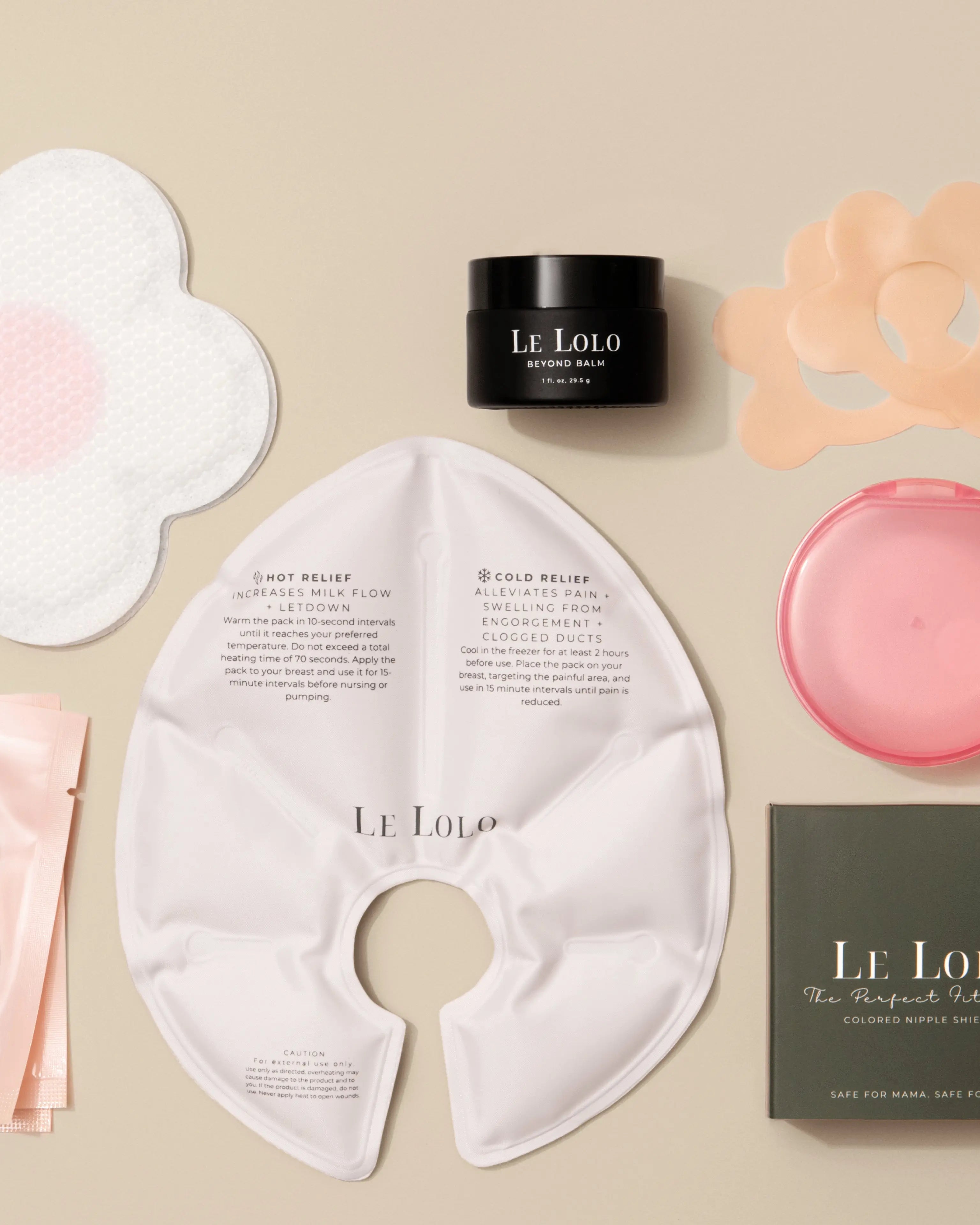
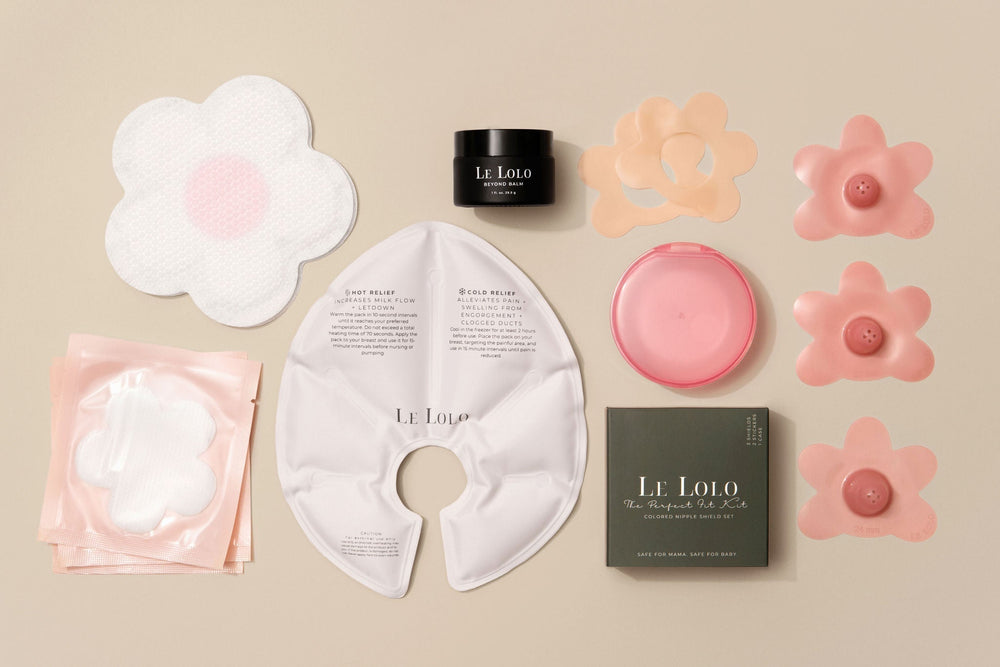
- Nipple balm. This is the single item most moms say they wished they had opened sooner. Some tenderness in the first week is common as your latch and your baby's latch find each other. Look for something lanolin free if you would rather not wash it off before every feed. Our Beyond Balm is organic and safe for baby, so it stays on.
- Two or three soft nursing bras or bralettes, one size up. Your ribcage and breast size both shift. Buying to your current size is how you end up with three bras you cannot wear and boobs that hurt because your bras are too tight.
- A large water bottle you can open one handed. Genuinely not a gimmick. You will be thirsty in a way that surprises you, and you will be holding a baby. So make sure it's an easy, one-handed grab!
- Snacks that need no preparation. Breastfeeding adds real caloric demand, in the range of a few hundred extra calories a day (CDC), so keep healthy, grab-and-go snacks filled at all times and nearby so you can keep your energy up and feel great about what you are putting in your body.
- The phone number of a lactation consultant. Find one before labor! Put them in your phone before you need it. More on why below.
Wait on: nursing pads, nursing covers, a nursing pillow you have not tried. In those first few days you are mostly feeding skin to skin on a couch.
What changes between those first days, to Week 2 through Week 6?
This is the stretch nobody prepares you for, and it is where the real breastfeeding essentials live.
Your supply is still calibrating. That means leaking, sometimes a lot, sometimes at three in the morning through everything you own. It usually peaks in these weeks and settles down as your body learns how much milk your baby actually needs (Office on Women's Health). Engorgement shows up in here too, and so does the first clogged duct for a lot of moms.
Nursing pads, and more than you think. This is the number one item moms underbuy. In the early weeks, plan for 10 to 16 pads a day if you are using disposables. Our disposable nursing pads hold up to three times more than traditional disposables, which is the reason that number is lower than the 20 plus you will see on other lists. A practical pattern a lot of moms land on: disposables in the first weeks when leaking is heaviest, then switching to reusable pads around six weeks once supply settles and you are washing less often anyway.
Something for engorgement. Fullness that goes past uncomfortable into hard and painful needs more than a warm shower. Hot and cold breast therapy packs cover both directions, and a lactation breast massager helps move milk through a breast that is not draining evenly. If you want the detail on when to use which, we wrote about ice versus heat for a clogged duct separately. Also make sure you have your pump on hand. Lactation consultants recommend pumping until relief. Do not over pump as this can increase your milk supply.
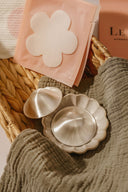
Something for nipple healing, separate from your balm. Balm is for prevention and mild soreness. If your skin is actually damaged, hydrogel cooling pads cool on contact and give you relief between feeds, and 999 silver nursing cups work differently again. We compared the two in hydrogel breast pads versus silver cups if you are deciding.
A way to keep track. By week three you will not remember which side you fed on last. An app, a written journal, a note on your phone, or our breastfeeding reminder scrunchie does the job.
Worth saying plainly: tenderness in the early weeks is common, but severe or ongoing pain is not something to wait out. Pain usually means the latch needs adjusting, and that is fixable (Office on Women's Health). If feeding hurts past the first week, call someone.
Do you need a nipple shield?
Only if you need one, which is an unsatisfying answer, so here is the longer version.
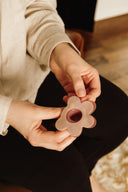
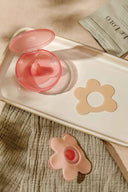
A nipple shield is a thin silicone cover that sits over the nipple during a feed. It is used for flat or inverted nipples, for damaged skin that needs a barrier while it heals, for premature babies with weak suction, and for babies who are struggling to latch. It is not a general purpose item, but it is a "thank goodness I have this on hand" item for when you really need one and don't have time to wait.
If you do end up using one, fit matters enormously, and guessing the size is the most common mistake. The wrong size can cause damage and make feeds painful rather than easier. Our Perfect Fit Kit includes 16mm, 20mm and 24mm for that reason, and our free sizing guide walks through measuring properly. We always recommend working the fit out with a lactation consultant rather than alone.
So: on the worth knowing exists list, so that if the hospital hands you one at 2am you understand what it is for.
What about a pump, and when? Also, what about an IBCLC?
Most moms do not need a pump in the first few days unless there is a medical reason, and in a lot of cases pumping early can complicate supply rather than help it. This is worth a conversation with a lactation consultant rather than a default purchase.
Here is the part more people should know: under the Affordable Care Act, marketplace health plans are required to cover breastfeeding support, counseling and equipment, which generally includes a breast pump (HealthCare.gov). Coverage details vary by plan, so call your insurer and ask what they cover and when you can order. Do not put a pump on a registry before you have made that call.
The same benefit usually covers lactation support and access to an IBCLC. Research links access to lactation consultant support with better breastfeeding outcomes (NIH), and it is the highest value thing on this entire page.
What Breastfeeding Essentials can you skip?
Not everything on a standard breastfeeding essentials list earns its place.
- A nursing cover, unless you want one. Many moms find a loose shirt and a muslin easier, and plenty never use a cover at all.
- Specialty nursing clothing, in bulk. Buy one or two things, see what you actually reach for, then buy more. Most moms end up living in a small number of items.
- Bottle warmers and elaborate sterilizing systems, at first. Hot soapy water works for a healthy full term baby at home. Add equipment when you know your routine.
- Multiple nursing pillows. One is plenty, and a regular pillow works for a lot of people.
- Lactation supplements, before you have a supply issue. If you develop recurring clogs, sunflower lecithin is worth knowing about, but it is a response to a problem rather than a starting item.
The underlying principle: buy shallow before birth, buy deep after you know what your body and your baby are doing. Almost nothing on this list is hard to get in two days.
What is the short version?
If you want one list to work from, this is it.
Before birth: nipple balm, two or three soft nursing bras, a big water bottle, easy snacks, an IBCLC's phone number, pump through insurance.
Have on hand for week two onward: nursing pads in quantity, something for engorgement, something for nipple healing.
Add as "nice to haves": nipple shield with proper sizing, lactation massager, sunflower lecithin.
Our Essentials Breastfeeding Set bundles the core of the middle group if you would rather not assemble it piece by piece, and our Breastfeeding Sample Pack is a smaller way to try things before committing.
Common questions
How many nursing pads do I really need?
Plan for 10 to 16 a day in the early weeks if you are using disposables, then less as leaking settles. Absorbency matters more than count. A pad that holds three times more means fewer changes, so the raw number you need is lower than generic lists suggest. Most moms find leaking drops off noticeably somewhere between six weeks and three months.
What should I buy before the baby comes versus after?
Before: the few things you would not want to send someone out for at midnight, which is essentially balm, bras, water and snacks. After: everything that depends on what your body actually does. You will not know how much you leak, whether you get engorged, or whether latch is easy until it happens.
Do I need nipple cream if breastfeeding is going well?
It is worth having. Early tenderness is common even with a good latch, and balm is more useful as prevention than as treatment. It is also cheap enough that having it unused is a better outcome than needing it at 3am and not having it.
When does breastfeeding stop feeling this hard?
For a lot of moms, somewhere around week six things shift. Supply settles, latch becomes automatic, and feeds get shorter. That is an average and not a promise, and if it is still hard past that point it is a reason to get support rather than a sign that something is wrong with you.
Is it worth seeing a lactation consultant if nothing is obviously wrong?
Yes! An early visit tends to catch small latch issues before they become damage or supply problems. Check your insurance first, since lactation support is a covered benefit under many plans.
If breastfeeding is painful, if your baby is not gaining weight as expected, or if something feels off, please reach out to an IBCLC or your healthcare provider. We are always happy to help with product questions, but fit and feeding belong with a professional who can see you.

Sources
- Office on Women's Health. "Making Breastmilk." https://womenshealth.gov/breastfeeding/learning-breastfeed/making-breastmilk
- Office on Women's Health. "Common Breastfeeding Challenges." https://womenshealth.gov/breastfeeding/breastfeeding-challenges/common-breastfeeding-challenges
- Office on Women's Health. "Common questions about breastfeeding and pain." https://womenshealth.gov/its-only-natural/overcoming-challenges/common-questions-about-breastfeeding-and-pain
- American Academy of Pediatrics, HealthyChildren.org. "How Often to Breastfeed." https://www.healthychildren.org/English/ages-stages/baby/breastfeeding/Pages/How-Often-to-Breastfeed.aspx
- Centers for Disease Control and Prevention. "Maternal Diet and Breastfeeding." https://www.cdc.gov/breastfeeding-special-circumstances/hcp/diet-micronutrients/maternal-diet.html
- HealthCare.gov. "Breastfeeding benefits." https://www.healthcare.gov/coverage/breast-feeding-benefits/
- Kapinos K, et al. "Lactation Support Services and Breastfeeding Initiation: Evidence from the Affordable Care Act." Health Services Research, via NIH. https://pmc.ncbi.nlm.nih.gov/articles/PMC5682156/


