

More Support for Your Motherhood Journey



Gifts for Breastfeeding Moms That She Will Actually Use
Gifts for new moms usually end up in a drawer. Here is what nursing moms keep reaching for, what to skip, and the non-product gifts that land hardest.
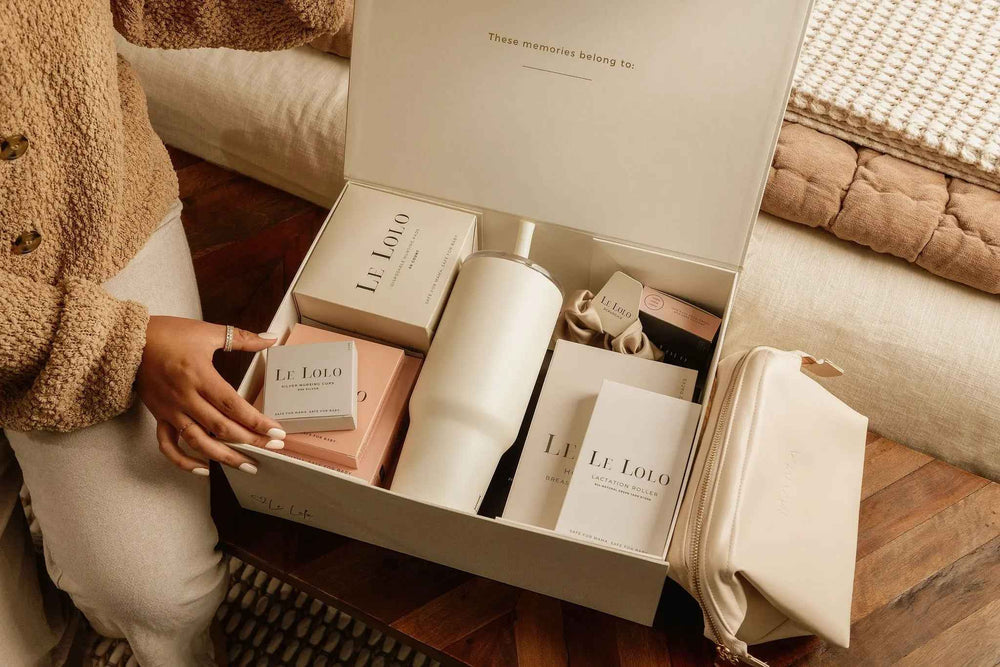
Most gifts for breastfeeding moms are bought by someone imagining the first week and used by someone living in the sixth. That gap is why so much of it ends up in a drawer. The blanket, the framed print, the pretty thing that requires washing by hand. Lovely, and not what she reaches for at 3am.
We sell breastfeeding products and we talk to the people using them, so this list is organized around a single question: what is still in daily use a month and a half in? Some of the answers are things we make. Several are not, and the best one on the page is not a product at all.

What do breastfeeding moms actually use?
Nursing is repetitive in a way that is hard to picture until you are doing it. Newborns feed roughly 8 to 12 times in 24 hours in the early weeks (HealthyChildren.org). Anything she uses during a feed, she uses ten times a day. Anything that requires effort, she uses once.
That is the whole filter. Small, repeatable, low effort.
The things that survive week two:
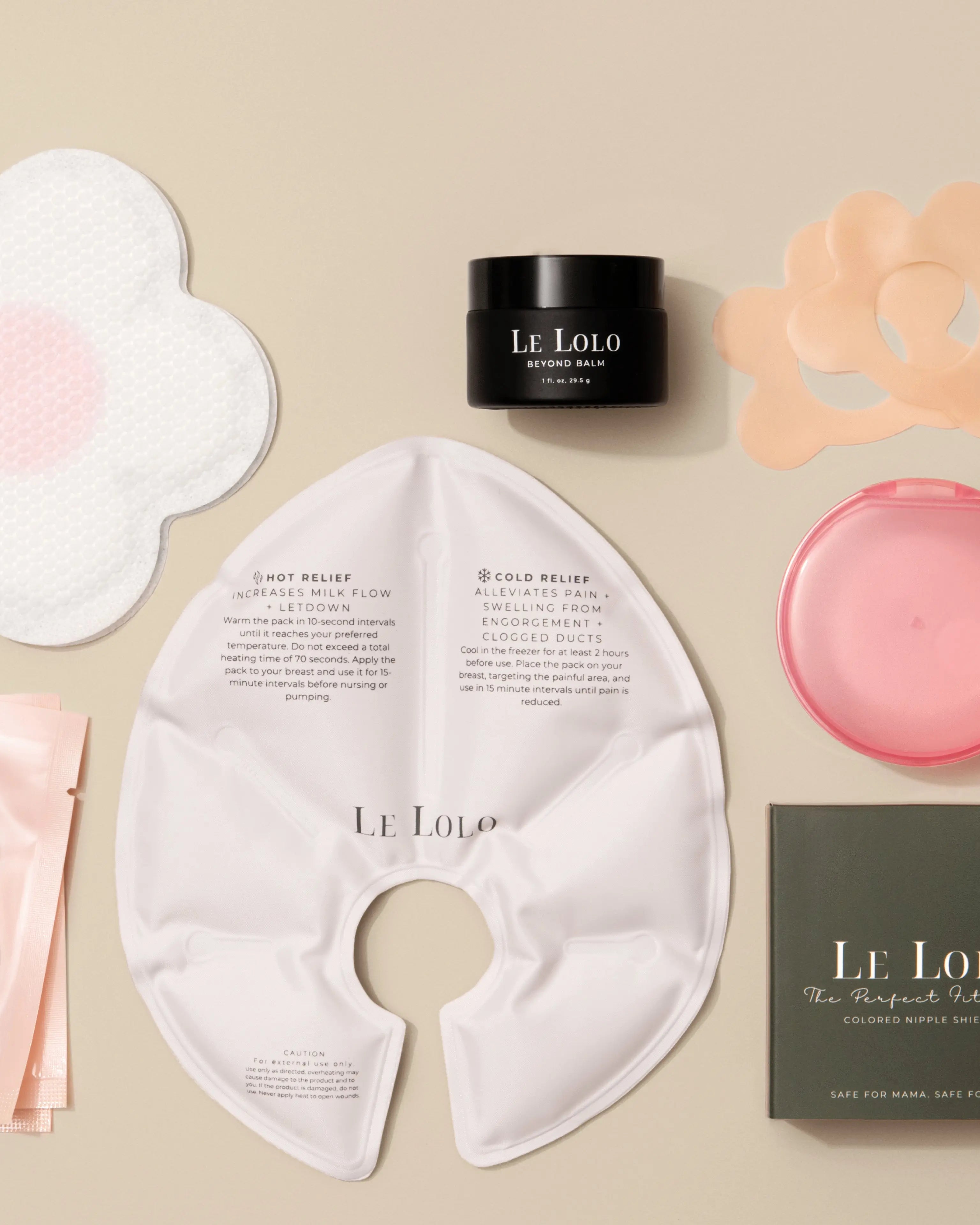
Something for her skin, that she does not have to wash off. Nipple tenderness in the early weeks is common (Office on Women's Health), and a balm is the item most moms tell us they wish they had opened sooner. Lanolin free matters here because it means no wiping before a feed. Our Beyond Balm is organic and safe for baby, so it just stays on. Fourteen dollars, and it is the single most used thing in the bag.
A water bottle she can open with one hand. Not a joke gift. Breastfeeding raises both fluid and calorie needs noticeably (CDC), and she will be holding a baby every time she gets thirsty. A quality water bottle is a genuinely good gift.
Relief for engorgement and clogs. This is the category people never think to buy and every nursing mom eventually needs. Hot and cold breast therapy packs at $16, or a lactation massager at $44 are the kind of thing she would not buy for herself until she was already in pain. Giving it before that happens is the point.
Nursing pads, in quantity. Unglamorous and constantly needed. Leaking peaks in the early weeks and settles as supply calibrates (Office on Women's Health), and she will go through a lot in the meantime. Reusable pads are a nicer gift than disposables because they feel like something rather than a supply run.
A journal. The days blur and she will not remember them. A Postpartum Journal with prompts and a feeding tracker does two jobs: it answers the "when did she last eat" question, and it gives her somewhere to put the rest of it.
Something that is only hers. A memory box, a nice robe, a good candle. The pattern we hear most is that everything arriving at the house is for the baby, and the one gift addressed to her is the one she remembers.
If you want the full picture of what a nursing mom actually uses and when, our breastfeeding essentials guide breaks it down week by week. It is a useful shopping list even when you are buying for somebody else.
What should you skip?
Being honest about this is more useful than a longer list.
Skip anything sized to her body. Nursing bras, clothing, anything with a fit. Her measurements are actively changing and you will get it wrong. A gift card is not a cop out here, it is the correct answer.
Skip a breast pump. Under the Affordable Care Act, marketplace plans are required to cover breastfeeding equipment and support, which usually includes a pump (HealthCare.gov). Buying one means spending a few hundred dollars on something her insurance would have given her.
Skip lactation cookies and supply supplements unless she has asked. Supply concerns are common and mostly resolve, and an unsolicited supply gift can read as a comment on how it is going even when you mean it kindly.
Skip anything that needs assembly, charging, an app, or hand washing. She has no spare attention. The bar is genuinely that low.
What are the best non-product gifts?
These are the ones people say landed hardest, and no affiliate list will recommend them because there is nothing to sell.
Pay for a lactation consultant visit. This is the best gift on the page and it is not close. An IBCLC session catches latch problems before they become damage or supply issues, and research links lactation consultant support to better breastfeeding outcomes and better postpartum psychosocial outcomes (NIH). Many plans cover this, so start by telling her to check (Office on Women's Health) and offer to pay if it is not covered or she wants someone specific.
Food, delivered, repeatedly. Not one lasagna. A standing order, or a meal delivery gift card, or showing up on Tuesdays. She is short on calories and shorter on hands.
Hours. Come over and hold the baby while she showers. Take the older child to the park. Do a night shift with a bottle if she is pumping. Time is the resource in shortest supply and the one nobody gives.
Chores, without being asked. Run the dishwasher, fold what is in the dryer, take the bins out. The rule is to do it without narrating it.
Say something kind about her, not the baby. Ask how she is. Most of her visitors will not.
What are the best gifts?
Under $20. Nipple balm. A breastfeeding reminder scrunchie so she stops trying to remember which side. Hot and cold therapy packs. Or a coffee delivery subscription.
Under $50. Reusable nursing pads with a tumbler. The Postpartum Journal. Our Breastfeeding Sample Pack at $30, which is a good way to let her find what she likes.
Under $100. The Essentials Breastfeeding Set at $80, or the Every Mama Set at $98, which is built around her rather than feeding specifically.
Going bigger. The Luxe Breastfeeding Set at $160, or the Ultimate Breastfeeding Set if several people are going in together, which is a good way to handle a shower gift from a group.
When you genuinely do not know. A gift card. She knows what her body is doing and you do not.
If she has a registry, check it before buying anything here.
What if breastfeeding is not going well?
This is worth its own section because it is common and people handle it badly.
If you know she is struggling, the gift is support, not equipment. More products can feel like more evidence that she is doing it wrong. Pay for the IBCLC visit. Bring food. Say that she is doing a good job and mean it.
If she has stopped breastfeeding, or never started, or is combination feeding, do not send nursing gifts. Send the ones in the non product section, which work regardless. Feeding is one of the more loaded things in early motherhood and a gift that assumes the wrong thing lands hard.
And if she seems unlike herself, that is worth paying attention to rather than buying something for. Postpartum depression and anxiety are common and treatable (ACOG), and noticing is more useful than any package.
Common questions
What is the best gift for a breastfeeding mom who already has everything?
Time, food, or a lactation consultant session. If she has the products, the thing she does not have is help. A gift card also works, because "everything" usually means everything somebody else chose.
What do you get a mom who is pumping or going back to work?
Ask her first, because pumping setups are specific. Generally useful: extra parts, a good insulated bag, anything that makes cleaning faster, and a nice water bottle. Do not buy the pump itself.
Is a gift card a lazy gift for a new mom?
No. It is the right answer any time fit, size or personal preference is involved, which covers most of this category. Pairing it with something small and physical makes it feel less like a transfer.
What should you put in a postpartum care package?
Balm, pads, a good snack, something warm to wear, a journal, and a note about her rather than the baby. Keep it to things that need no setup.
When should you send a gift?
Either before the birth, so it is there when she needs it, or around three to four weeks after, when the first wave of visitors has gone and it is quiet. The week of the birth is the most crowded and the least useful time.
If the mom you are buying for is having a hard time with feeding or with pain, the most useful thing you can do is encourage her to see an IBCLC or her healthcare provider. We are always happy to help if you want a hand choosing something, just reach out.
Sources
- American Academy of Pediatrics, HealthyChildren.org. "How Often to Breastfeed." https://www.healthychildren.org/English/ages-stages/baby/breastfeeding/Pages/How-Often-to-Breastfeed.aspx
- Office on Women's Health. "Common questions about breastfeeding and pain." https://womenshealth.gov/its-only-natural/overcoming-challenges/common-questions-about-breastfeeding-and-pain
- Office on Women's Health. "Common Breastfeeding Challenges." https://womenshealth.gov/breastfeeding/breastfeeding-challenges/common-breastfeeding-challenges
- Office on Women's Health. "Finding breastfeeding support and information." https://womenshealth.gov/breastfeeding/learning-breastfeed/finding-breastfeeding-support-and-information
- Centers for Disease Control and Prevention. "Maternal Diet and Breastfeeding." https://www.cdc.gov/breastfeeding-special-circumstances/hcp/diet-micronutrients/maternal-diet.html
- HealthCare.gov. "Breastfeeding benefits." https://www.healthcare.gov/coverage/breast-feeding-benefits/
- American College of Obstetricians and Gynecologists. "Postpartum Depression." https://www.acog.org/womens-health/faqs/postpartum-depression
- Chaves K, et al. "Perceptions About Lactation Consultant Support, Breastfeeding Experiences and Postpartum Psychosocial Outcomes," via NIH. https://pmc.ncbi.nlm.nih.gov/articles/PMC7965244/


