
More Support for Your Motherhood Journey








Postpartum Identity Crisis: Why Becoming a Mom Can Feel Like Losing Yourself
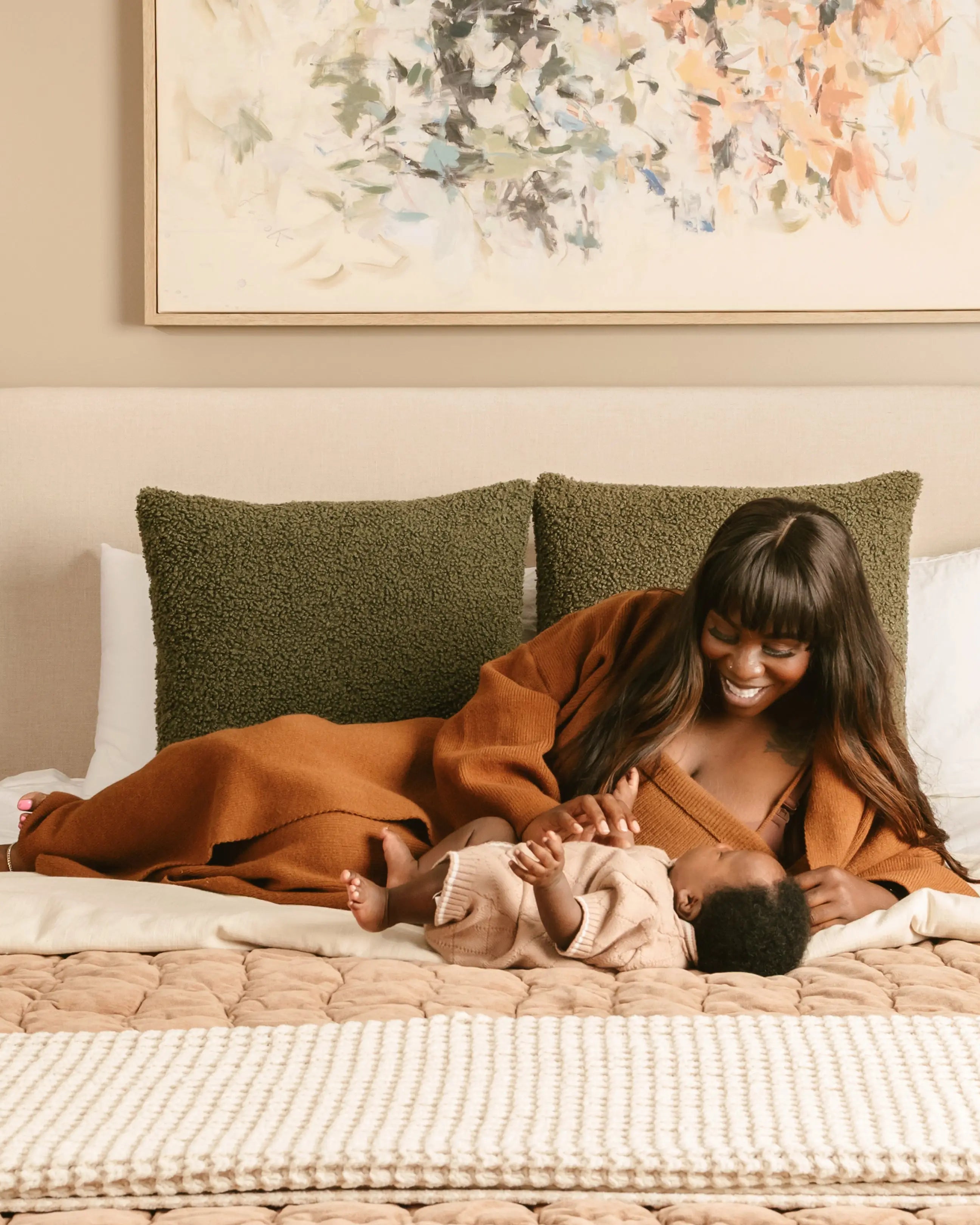
"I just don't feel like myself anymore" is one of the most common things mothers say, and one of the least talked about. A postpartum identity crisis is not a sign that you love your baby less. It is what happens when almost every reference point you used to locate yourself moves at once. Kate Kripke, LCSW, PMH-C, on why you can love motherhood and still miss who you were, and what reconnecting with yourself actually looks like.
Written by Kate Kripke, LCSW, PMH-C | Updated September 2026
There's a particular sentence I've heard from mothers over and over again in the more than 20 years I've spent working in maternal mental health:
"I just don't feel like myself anymore."
What she is describing is a postpartum identity crisis, and it is one of the most common experiences of early motherhood that almost nobody says out loud.
Sometimes it comes with sadness. Sometimes resentment. And, sometimes guilt.
This woman loves her child, often more than she knew she could love another human being. She wanted to become a mother. She may even feel incredibly grateful that she got to become one.
And, she also misses herself.
She misses the woman who could decide at 5:00 that she wanted to meet a friend for dinner and just…go. She misses being good at her job and knowing it. She misses finishing a thought. She misses her partner, her body, her friends, and her Sunday morning run. She misses traveling without doing the logistical planning of a small military operation.
Sometimes she simply misses having parts of her life that belonged only to her.
But then she thinks, What kind of mother feels this way? And the guilt comes rushing in.
You know what kind of mom feels this way?
A very normal one.
But I actually want to go further than reassuring you that losing yourself in motherhood is normal. Because after spending much of my career listening to women describe this experience, I'm not sure "losing yourself" tells the whole story.
I think something much bigger may be happening.
Why a postpartum identity crisis happens
Before becoming a mom, you had an entire life that helped you know who you were.
Maybe you were a physician, an attorney, a teacher, an artist, or an entrepreneur. Maybe you were the friend everyone called when something went wrong. Maybe you were fiercely independent. Maybe you loved your work. Maybe you loved sleeping until 9:00 on Saturdays.
None of those things was your entire identity, of course, but together they created a familiar sense of me.
Then you had a baby.
And suddenly, many of the things that helped you recognize yourself changed at the same time.
Your time wasn't entirely yours. Your body may not have felt like yours. Your relationships changed. Your work changed…or your relationship to your work did. Your priorities may have shifted in ways you didn't expect.
Even the things you were exceptionally good at might not have helped much at 2:13 a.m. with a baby who had been fed, changed, rocked and bounced and was still screaming.
This is one of the pieces of motherhood I don't think we talk about enough, because becoming a mom isn't simply adding a baby to your existing life.
It changes the life the baby is being added to.
That is the real engine underneath a postpartum identity crisis. It isn't that you stopped caring about who you were. It's that almost every reference point you used to locate yourself moved at once, in the same few weeks, while you were more tired than you have ever been.
Is it normal to miss who you were before becoming a mom?
Yes. And I want to say that plainly, because so many women ask it in a whisper.
Missing your old life is not evidence that you love your baby less. It is evidence that you had a life. The grief is proportional to how much there was to grieve, which means the women who feel this most sharply are often the ones who had built something they cared about.
Guilt tends to arrive in the same breath, and guilt is a terrible narrator. It will tell you that a good mother wouldn't feel this way.
Every day, in my office, I meet the good mothers who feel exactly this way.
Why losing yourself after having a baby hits high achieving women hard
Many of the women I work with entered motherhood having built very successful lives by becoming incredibly good at figuring things out. They know how to plan, research, organize, anticipate, execute, and work harder when something isn't working.
These are extraordinary skills. I call them Strategic Intelligence, and I don't want women to lose any of them.
But motherhood introduces something many successful women haven't had to contend with quite this relentlessly before: uncertainty.
You can read every book and your baby may not follow the book. You can create the perfect schedule and your child can wake up sick. You can make what you believe is the best parenting decision and still wonder whether you've gotten it wrong. And you can love your kids fiercely and sometimes desperately want to be somewhere where nobody needs anything from you.
There are contradictions everywhere.
And if you are accustomed to knowing yourself as capable, productive, independent and able to figure things out, motherhood can make you question not only what you're doing, but who you are.
That can feel an awful lot like losing yourself.
What if you aren't supposed to go back?
When women tell me they want to "feel like myself again," I understand exactly what they mean. And I also think we need to be careful with the word again.
Because there can be an unspoken assumption underneath it:
There was a version of me before motherhood who was whole, and motherhood disrupted her. Now I need to find my way back.
But what if back isn't actually the direction you're going?
You haven't stopped being the woman you were before you had children. Your ambition didn't disappear. Your intelligence didn't disappear. Your need for friendship, purpose, creativity, solitude, sex, work, adventure or a quiet cup of coffee didn't disappear simply because somebody started calling you Mommy.
Those parts of you still matter.
But another part of you is developing alongside them.
Motherhood asks things of us that much of adult life does not. It asks us to tolerate extraordinary amounts of uncertainty. It beckons us to remain in relationship when another person is upset with us. It requires us to love someone we can't control. It forces us to make decisions without knowing exactly how they'll turn out. It needs us to repair after we get things wrong. And, honestly? It inevitably invites us to change as our children change.
Those aren't lesser skills than the ones that helped you succeed before motherhood.
They're different ones.
Can you love motherhood and still miss your old life?
You can.
And I wonder if much of the motherhood identity crisis so many women experience comes from believing they have to choose.
Either I'm the ambitious woman I was before, or I'm a devoted mother.
Either I care about my work, or I care enough about my children.
Either I want time away, or I love being with them.
Either motherhood fulfills me, or something must be wrong.
But human beings aren't either/or creatures.
You can adore your kiddo and miss your old life. You can be grateful to be a mother and hate parts of mothering. You can want to be present for your children and want work that matters deeply to you. You can need a break from someone you would walk through fire for.
None of these cancels out the other.
Maybe "finding yourself" isn't quite the goal
I don't think the work is necessarily to find the woman you were before you became a mother.
I think the work is getting curious about the woman who exists now.
What from your old life still matters deeply to you? What have you outgrown? What do you miss because it genuinely fed you, and what do you miss because it made you feel competent or in control? What parts of yourself have been pushed so far to the edges that they need some room again? And what new capacities are developing in you that you haven't yet learned to recognize as strengths?
These aren't questions you answer once.
My children are older now, and I can tell you that motherhood continues to ask them.
Who you are when your baby needs you constantly will not be exactly who you are when that child starts kindergarten. And that won't be exactly who you are when they become a teenager, or leave home.
Your children keep becoming. So do you.
How do you start reconnecting with yourself after having a baby?
I want to say this clearly because I think mothers still receive far too many messages suggesting otherwise:
Your needs did not become irrelevant when your child was born.
Taking your own life seriously is not the opposite of loving your kids. In fact, I think one of the most important things we can give our children is the experience of being loved by a whole human being rather than a person who has erased herself in the name of being a "good mother."
That doesn't mean every season will be balanced. There may be months or years when your children need enormous amounts from you. There may be things you choose to set aside for a while because something else matters more right now.
But setting something down is different from believing you are no longer allowed to want it.
And sometimes reconnecting with yourself begins in very ordinary ways.
Ways like…seeing the friend you've stopped calling. Going back to something that used to make you feel alive. Asking someone else to take over bedtime. Remembering what you like when no one else gets a vote.
It can also begin with something much smaller than that.
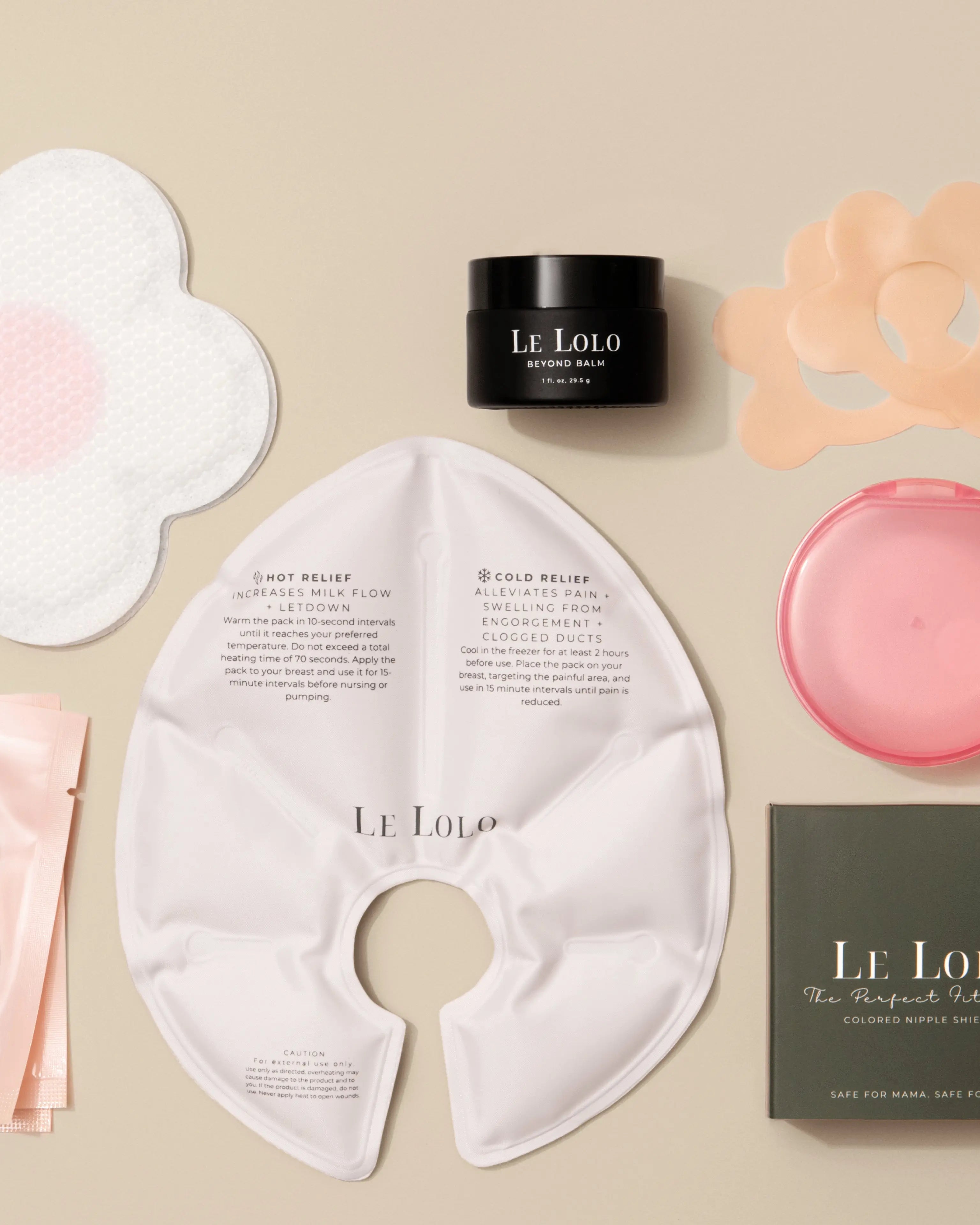
Most of what a new mother is handed is for the baby. Very little of it is for her.
Making space for your own comfort and needs—even in small ways—is a quiet way of reminding yourself that you still count.
These things won't magically restore your "old self." But they will remind you that motherhood is one part of your identity, even when it is currently one of the biggest parts.
When a postpartum identity crisis needs more support
There's also an important distinction between the very real identity disruption that can come with becoming a mother and struggling in a way that deserves professional support.
If feeling unlike yourself comes with persistent anxiety, hopelessness, panic, intrusive thoughts, intense anger, difficulty functioning, feeling disconnected from your baby, or a sense that you just can't find your way through, please don't assume this is something you just have to push through because motherhood is hard.
You deserve support.
Sometimes what we call "losing ourselves" is part of a normal developmental transition. Sometimes anxiety, depression or another perinatal mental health concern is part of the picture. And sometimes both are happening at once.
There is no prize for figuring out which one it is by yourself.
If you are in the United States, the Postpartum Support International helpline is 1-800-944-4773, and the 988 Suicide and Crisis Lifeline is available by call or text at 988.
Maybe you haven't lost yourself at all
I've spent a lot of years thinking about what happens to women when they become moms, and I don't believe motherhood requires us to become less ambitious, less interesting, less powerful or less ourselves.
But I also don't believe the goal is to emerge from motherhood unchanged.
How could we?
Loving another person this much changes us. Being responsible for another human being changes us. Having our limits exposed changes us. And discovering that we cannot control everything… changes us.
Motherhood isn't asking you to become less of who you were.
It's asking you to become fluent in more ways of being.
Motherhood is an opportunity to learn when to solve and when to stay, when to hold on and when to loosen your grip, and when your child needs you and when you need to come back to yourself.
That woman may not feel completely familiar yet, but unfamiliar isn't the same thing as lost.
Sometimes it's what becoming looks like.
Kate Kripke, LCSW, PMH-C, is a maternal mental health expert, parenting coach, and founder of the Calm Connection Accelerator™. She is also the author of Reinventing Supermom and founder of the Parent and Family Wellness Center in Colorado. Kate helps mothers navigate the emotional side of parenthood with confidence and connection.

From Le Lolo
Motherhood can ask so much of you that it's easy to put your own needs at the very bottom of the list. But taking care of yourself doesn't have to mean finding hours of uninterrupted time or making a major change.
Sometimes, it can start with something small that makes your day a little more comfortable.
Whether that's finding support that makes feeding easier, creating a few minutes that are just for you, or simply remembering the things that make you feel like yourself, those small moments matter.
You're still in there. And you deserve care, too.


